Contact us
 01 53 32 75 75



Contact us
01 53 32 75 75
As part of Advans’ 20th anniversary, Jean-Luc Nzoubou, CEO of Advans Congo, was interviewed to reflect on the Group’s journey and impact over the past two decades. Having joined Advans 18 years ago, starting at Advans Cameroon before taking on key roles across Côte d’Ivoire and Nigeria his career path embodies the Group’s long-term commitment to building inclusive finance rooted in local realities.
Through this interview, Jean Luc Nzboubou, CEO of Advans Côte d’Ivoire, highlights the commitment of Advans International to micro finance Africa and explains how, as part of international microfinance institutions, it supports local small businesses, facilitates access to financial services, and strengthens the economic and social resilience of communities, while promoting sustainable and inclusive growth.

As it marks the 20th anniversary of your group, what are the tangible impacts of Advans on the transformation of African economies?
We contribute to the development of African economies by supporting small informal or partially formalized businesses, because it is above all these entrepreneurs who drive the dynamism of local economies.
Indeed, the informal economy is estimated to represent between 38% and 40% of GDP in Sub-Saharan Africa (Source: ScienceDirect), with 43% of adults in the region reporting that they are self-employed or own a business (Findex).
We therefore assess our impact on African economies by directly engaging with our micro and small enterprise clients. In particular, we focus on what they tell us regarding revenue growth, job creation, improvements in quality of life, and progress toward their financial goals.
According to our latest survey conducted in 2024 by the independent research institute 60 Decibels, key findings include:
– 83% of our clients report that their income has increased thanks to Advans;
– 27% say they have been able to hire new employees since partnering with Advans (compared to a global industry average of 10%);
– 85% state that their quality of life has improved since working with Advans.

Focus on Central Africa, specifically Cameroon: how would you describe Advans’ positioning in fostering the well-being of local populations?
We have been operating in Cameroon for 18 years. Advans Cameroon is our historic subsidiary and the very first one launched by the Group. As such, we are particularly committed to the impact we deliver there. This is especially meaningful to me personally, as I am Cameroonian and began my professional journey with Advans in Douala 18 years ago.
We currently operate in Cameroon through a network of 14 branches and a team of 380 employees, serving more than 81,000 clients.
As across our entire African network, our primary focus is on supporting small local businesses. These operate in a wide range of sectors: trading, retail, restaurants, schools, services, and agricultural activities. We also pay close attention to the financial inclusion of women entrepreneurs, who today represent 26% of our active borrowers (September 2025).
When it comes to the well-being of local communities, our clients themselves speak best to our impact. I would highlight two key figures from our latest client survey (60 Decibels, 2024):
In Cameroon:
– 50% of our clients state that their income has increased very significantly with Advans (11 percentage points above the African industry average);
– 47% say that Advans has had a significant impact on their quality of life (+2 percentage points versus the African industry average).
Operating in six very different African countries, how did Advans adapt its approaches to meet diverse local needs?
There are as many “Africas” as there are countries on the continent, and indeed the needs of local entrepreneurs vary widely from one country to another.
We offer several core products that we know address strong needs across all our geographies.
On the lending side: working capital loans, investment loans, emergency loans (for customs clearance, for example), and education loans.
On the deposit side: current accounts, of course, as well as various interest-bearing savings solutions.
However, even for these flagship products, subscription conditions differ to reflect local realities, such as accepted collateral types or loan amounts.
We also provide digital services: mobile applications in our most digitized countries (Nigeria, Ghana, Côte d’Ivoire), as well as mobile money services through partnerships with telecom operators.
In some countries where rural clients represent a large share of the population, we have developed specific offerings for agricultural value chains such as cocoa, shea butter, and cashew nuts. In Côte d’Ivoire, for example, we work closely with cocoa cooperatives and village savings and loan associations (VSLA/AVEC).
Finally, we are increasingly developing insurance solutions to meet our clients’ needs for health and life coverage, as well as protection against climate-related risks.
One major challenge in Africa is the lack of financing, which stifles entrepreneurs. How does Advans contribute to SME growth?
Taxation is not within my remit to comment on. What is clear, however, is that if SMEs need “oxygen” to finance their growth, access to formal financial services can be decisive.
At Advans, we deeply believe in this, and it is what we have been fighting for over the past 20 years: advancing financial inclusion. Giving entrepreneurs breathing room, helping them move away from informal sources of financing. Offering simple and practical current accounts and transaction services, along with sustainable savings solutions.
For context:
In Africa, it is estimated that 82% of adults who have borrowed at least once did so from an informal source (World Bank Findex, 2024). Yet, the conditions offered by moneylenders and informal savings groups are far from ideal, with interest rates sometimes reaching 30% to 50%, and loan tenors often being very short and poorly suited to business needs.
On the financial management side, only 58% of adults in Sub-Saharan Africa have a bank account (World Bank Findex). Entrepreneurs in the informal or semi-formal sector need current accounts to manage their business transactions reliably, and they need financing to grow.
That is why we are here. Over the past 20 years, we have supported more than one million clients across Africa.
What levers have you put in place to strengthen financial inclusion for women, youth, and rural populations at scale?
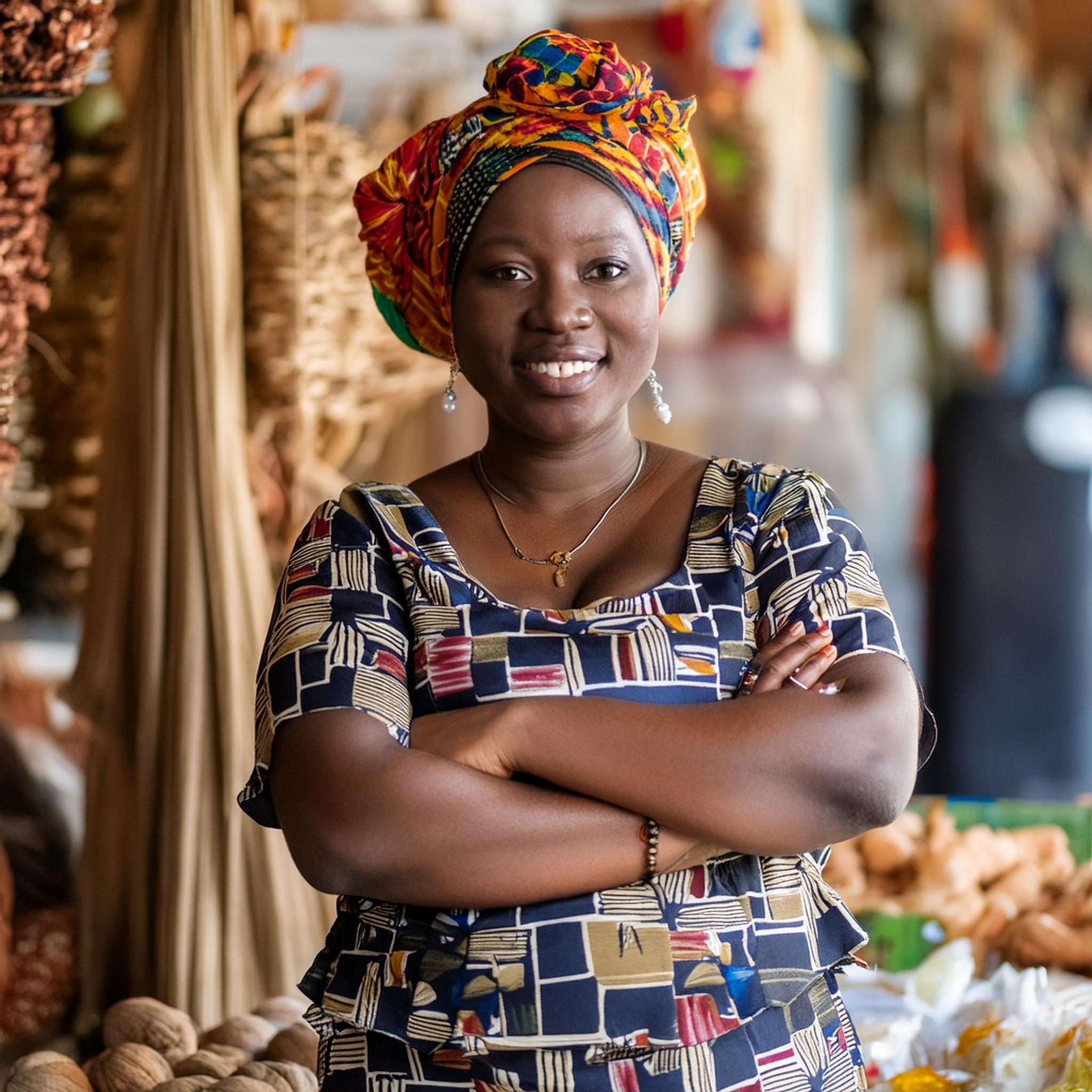
In Sub-Saharan Africa, slightly over 50% of economically active women are self-employed, yet the barriers to their financial inclusion are numerous and differ from those faced by men. We therefore develop products specifically tailored to their needs.
For example, Advans Ghana launched the AdvansHer program a year ago in partnership with the Ghana Development Bank. This women-focused program has three pillars:
– Training: social media usage, business formalization, basic accounting. To date, 100 women entrepreneurs have received in-person training.
– Financing: a more flexible collateral policy to facilitate access to larger loans. Over one year, total disbursements to women increased by 50% (July 2024 – June 2025).
– Education: through the EduSave savings product, with over 2,000 accounts opened since the end of October 2025.
In Tunisia, the team offers a women-focused loan called El Baya. Collateral requirements have been adapted to offer greater flexibility, application fees are lower than for standard loans, and each client benefits from free borrower insurance. As of September 2025, Advans Tunisia had disbursed 5,250 El Baya loans for a total value of €7.6 million.
In Côte d’Ivoire, our subsidiary works closely with village savings associations (AVEC), which are composed of 80% women. Overall, women now represent 35% of our client base.
For rural populations, we support market gardening and livestock activities in Tunisia, and cocoa, cashew, and shea value chains in Côte d’Ivoire and Ghana. In Côte d’Ivoire, we work with many agricultural cooperatives, aligning repayment schedules with harvest seasons. We also offer a digital rural loan to finance children’s education.
In response to climate challenges, Advans Côte d’Ivoire also raises awareness among rural clients and is piloting index-based climate insurance in close collaboration with agricultural cooperatives. Across our network, agricultural activities now represent 23% of our client base.
Regarding youth, we have developed simple, secure digital services accessible 24/7. Our loans are available after 12 months of business activity, and sometimes after just 6 months for smaller amounts.

What digital innovations have enabled you to expand your reach while maintaining close client relationships?
Digitalization across Africa has accelerated dramatically over the past five years and has been a powerful driver of financial inclusion.
In our most digitized markets, clients can now manage their financial transactions securely 24/7 via self-service mobile applications: transfers, supplier payments, balance inquiries, loan applications, and more. This is the case in Nigeria, Ghana, and Côte d’Ivoire. There is no longer a need to visit a branch or comply with counter opening hours.
We have digitized our credit processes, enabling faster disbursements, and we offer digital loans and automatic renewal solutions.
However, not all our clients have smartphones or internet access. While over 90% of the population in our countries owns a mobile phone, only 40% to 60% have internet access. It therefore became essential for us to offer simple, innovative alternatives that allow clients to carry out secure transactions without visiting a branch, from any basic mobile phone, with or without the support of a local telecom agent.
We offer electronic wallet solutions in partnership with local telecom operators, enabling bank-to-wallet and wallet-to-bank transactions.
We also provide USSD solutions accessible via shortcodes. In Cameroon, we are currently working on a USSD service planned for early 2026.
Finally, by equipping mobile agents with applications, we offer assisted transaction services, such as small savings collection.
Today, more than 85% of transactions in Ghana and over 75% in Côte d’Ivoire are conducted through these alternative channels (versus 25% in branches). Across all our countries, more than 50% of client transactions take place through these channels.
These technologies complement our branch network and call centers, creating a value proposition that combines technology with proximity. Trust is built through client relationships, with a balanced approach across all channels.

How do you integrate sustainability and responsible finance into your activities?
Business sustainability is a key issue in responsible finance. Beyond economic and political risks, climate change and increasing weather disruptions now pose major threats. We estimate that climate risks affect around one-quarter of our client base, both rural and urban.
At Advans, we have therefore developed a climate strategy aimed primarily at strengthening client resilience to climate shocks, whether droughts, fires, or floods. Our goal is to help clients anticipate and adapt. This strategy is built around several pillars:
– Training Advans teams and raising client awareness;
– Assessing climate risks by geographic area and client type;
– Developing dedicated products.
This action plan is currently being deployed in three pilot countries: Tunisia, Ghana, and Côte d’Ivoire, with plans to extend it to our entire network over the next two years.
In Côte d’Ivoire, we have conducted several climate insurance pilots in collaboration with agricultural cooperatives, reaching more than 1,200 producers, and this is only the beginning.
Another major pillar of responsible finance is client protection.
This year, two of our subsidiaries were certified, Advans Tunisia (Gold level) and Advans Côte d’Ivoire (Silver level). We aim to certify all our subsidiaries by the end of 2026.
These certifications ensure strict compliance with the highest international standards for client protection, including:
– Product design aligned with client needs;
– Pricing transparency;
– Respect for clients;
– Strict data protection;
– Client feedback mechanisms for continuous service improvement.
We are one of the very first microfinance groups to be certified on the African continent.
What are the next steps for the expansion of Advans on the African continent ?
Geographically, we aim to expand our footprint across Africa by strengthening our presence in North, West, and Central Africa, while also entering new territories.
At the same time, we seek to deepen our impact in the countries where we already operate, where much remains to be done:
– Better serving women;
– Better supporting agricultural populations;
– Ensuring strong client protection;
– Strengthening resilience to climate change.
We will achieve this by reinforcing our High Tech – High Touch model, combining technology with close, human-centered client relationships.
Twenty years after its establishment, Advans International continues its mission: expanding access to formal financial services, supporting microcredit Africa, enhancing microfinance for women, and assisting entrepreneurs in addressing economic and climate-related challenges. By combining innovation, on-the-ground proximity, and responsible finance, Advans aims to remain a key player in evolving economies, delivering measurable and lasting impact through international microfinance initiatives.